The Tindeq Test for Quad Strength
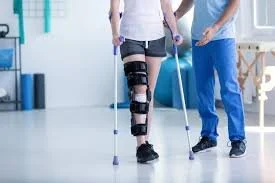
If you’ve ever been through physical therapy for a knee injury, you’ve likely experienced a Manual Muscle Test (MMT). A therapist pushes against your limb and asks you to "hold, hold, hold!" while they grade your strength on a scale of 0 to 5.
While MMT is a classic test, it has a major flaw: it’s subjective. For an athlete looking to return to a high-speed sport or a patient wanting to ensure their ACL recovery is on track, "Grade 5 strength" isn't accurate enough.
That is why Accelerated Sports Therapy and Fitness has integrated the Tindeq Progressor into our recovery process. Here is how this small but mighty tool is changing the game for testing and quantifying recovery.
What is the Tindeq Progressor?
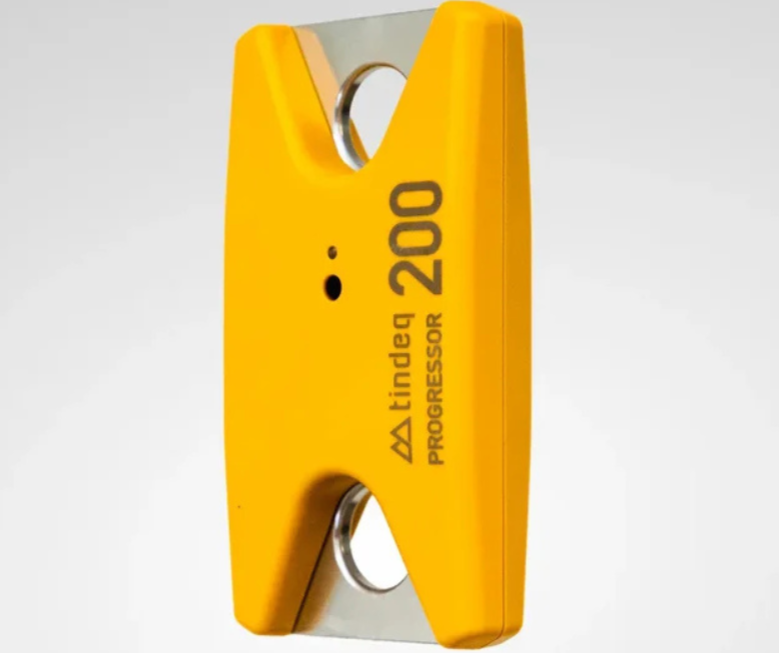
The Tindeq is a wireless digital dynamometer—essentially a high-precision load cell that measures exactly how much force your muscles can produce.
Originally developed for elite rock climbers to measure finger strength, it has become a "secret weapon" in the PT world. It connects via Bluetooth to an app on our phones, giving us a real-time graph of your force output.
How It Works for Quad Testing
Testing your quadriceps with the Tindeq is simple, objective, and safe.
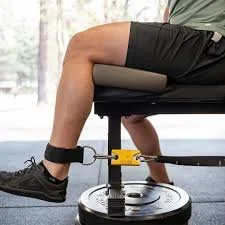
The Positioning: We typically have you sit at a treatment table or a Seated Leg Extension machine.
The Anchor: One end of the Tindeq is attached to a fixed, non-moving point, and the other end is attached just above your ankle using a non-stretch strap.
The Effort: You will perform a Maximal Isometric Contraction. This means you kick out as hard as you can against the strap. Because the strap doesn't move, your quad works at its peak capacity without the knee joint actually moving, making it highly secure for healing tissues.
The Data: The app captures your "Peak Force" in real time.
Why This Matters for Your Recovery
Finding the Limb Symmetry Index (LSI)
After an ACL surgery or knee injury, the "gold standard" for returning to sport is usually having the injured side within 90-95% strength of the healthy side. You can’t guess that with your hands. Tindeq gives us a Limb Symmetry Index, so we know exactly when your muscles are truly strong enough to allow you to return to the field or gym.
Identifying Muscle Imbalances
For knee health, it’s about the balance between your quads and hamstrings. If one muscle group is significantly overpowering its counterpart, your risk of future injury increases. We use Tindeq to find that "sweet spot" of muscular balance.
Beyond the Quads: Comprehensive Strength Testing
While quad strength is a primary focus for lower-body rehab, the versatility of the Tindeq Progressor allows us to evaluate other crucial muscle groups as well. By adjusting the straps and positioning, we regularly use it to measure hamstring strength and shoulder strength, specifically tracking the balance between internal and external rotators to ensure proper stability and rotator cuff recovery.
The Bottom Line
We don't want to guess when it comes to your health. By using Tindeq testing, we move away from “it feels strong” and towards it is strong. This data ensures your rehab program is tailored specifically to your body's needs. Schedule an appointment with Accelerated Sports Therapy and Fitness today to get your strength quantified with the Tindeq Progressor.